A very simple picture, a pair of lips made of alcohol bottles with less than 25 words advertising delicious, UV Pink Lemonade Vodka. The lips are easy to understand-a kiss for Valentine’s Day. This is pretty straightforward; a Valentine’s Day party is going to be a lot more fun with alcohol, especially UV Vodka. There is even a recipe for a drink-Secret Crush. What better way to show someone you like him or her, then a mixed drink. This ad is illustrating very clearly how in today’s young adult world alcohol and sex have become tightly linked and viewed as a casual thing.
Valentine’s Day in America is a time to be with a loved partner, to show your love for that person who is most special to you, or maybe just to find a partner who will give you some love for the night. What can help someone in a quest for love? Alcohol. The shape of the lips says a lot. First the shape is one associated with a girl’s lips. Second the color of the lips, pink, is associated with girls, as most guys don’t wear pink lipstick. The lips are slightly open ready for a kiss or perhaps to accept something else within. So the UV Vodka is meant for girls and will make them ready for love. In other words guys if you want some action give your girl some delicious vodka and you have the key to her heart (or mouth or maybe somewhere else that was once guarded by a chastity belt that also required a key, although not a liquid one). In any case alcohol plays a large role it would seem in young guys and girls today getting together for some sexual activities.
This advertisement was from a Rolling Stone magazine. In general Rolling Stone markets to younger people so it is fairly obvious that this ad is targeting young people. Second UV Pink Lemonade is one of the new “pop” alcoholic beverages that are generally targeted to young people. This targeting of young people along with the implied idea that you can obtain sex or at least love using alcohol is fairly widespread through American culture. In fact one of the most popular movies over the summer, Superbad, was based exclusively on the quest of two high school seniors to get alcohol so they could hook up with some hotties. I went to this movie in a full theater and I can tell you I didn’t see anyone who appeared to be much older than college aged. Another movie with a similar target demographic was Knocked Up, which features casual sex between two young people after a night of drinking as the catalyst for the rest of the story. Even when I went to orientation for college this summer one thing that was emphasized was practicing safe sex and the relation of alcohol and sex. If the University feels this is a big enough deal to tell every incoming freshman then this is real and not just based in movies.
The ad even uses the word love. At the bottom it says, “Give your party some love”. Once again the recurring theme of love comes up. Isn’t love something that is intangible and exists between people who have generally built up a relationship over years? This is saying that love is a tangible thing that can be purchased and supplied in colorful bottles. Parties with alcohol are usually quite casual. I have never been to a party where every one loves each other, at least not in the way associated with Valentine’s Day, romantic love. So a different kind of love is going to be found, probably the kind involving a combination of a certain appendage and any number of orifices. Everyone wants to have a good time at a party and what better way than to find some love (and I think we know which kind).
This ad has many signifiers linking alcohol and casual sex among today’s college aged and twenty somethings. The lovely girl’s mouth made of alcohol bottles, the suggestion of buying love in the form of vodka for a party, and the ad bringing up Valentine’s Day as a day to celebrate with alcohol. The use of UV Vodka Pink Lemonade, a drink intended for the young, as well as other examples of the casual nature of sex such as in Superbad, Knocked Up, and that the casual hook ups that are widely expected at college parties, show how alcohol is an integral part of the casual sex that is common among today’s young adults.
Thursday, February 14, 2008

Monday, December 17, 2007
Alcohol Paper
It is somewhat ironic that the study by Wagenaar and Toomey cites the constitution in justifying the age discrimination of those under 21 with regards to alcohol seeing as how from many historical accounts of our founding fathers, the writers of the constitution were often inebriated themselves. Due to age discrimination and other reasons the drinking age should be lowered to 19.
The fact is not allowing those under 21 years old and over 18 to drink is age discrimination. To say that someone who is 20 years and 364 days old suddenly becomes responsible 24 hours later doesn’t make a whole lot of sense. The fact is most people learn through experience or education or from their peers about alcohol not from magical knowledge that one suddenly gains when he or she turns 21. One study said also that people are less likely to have drinking problems if they start after 21 then if they do before. One problem I see with this study is that it picked 21 as its age. What if this study used 20 or 19 and could find the same results?
The drinking age should be 19 because of the college situation in America. On a lot of campuses underage drinking is turned a blind eye to as long as it is kept under control. All this does is drive kids into hiding and creates a culture of fear and unnecessary tensions between authority figures and students. If it was out in the open people won’t be as ignorant or secretive about it. It also allows for more free discussion and education about problems that can occur because kids will be less scared to admit that they drink without having to worry about punishment. 19 is better than 18 because this makes sure that people who are legal are of college age and not still in high school therefore making sure that high school access to alcohol is not increased.
An overall statement that is constantly made and is assumed throughout the study is this statement, “underage drinking is a serious problem.” The thing is, is it a problem? If you define a problem as people under 21 being drunk a problem, as the study does, than yes there is a problem. Then wouldn’t you have to say that overage drinking is a problem too? People over the age of 21 get drunk too. With this kind of logic the drinking age should be raised so high that no one can drink because according to the study the problem is consuming alcohol or being drunk in itself is a problem, not the health side effects or other problems like drunk driving or poor judgment. If the drinking age is lowered to 19, then underage drinking will be less of a problem because a percentage of the population that was previously underage will now be legal alleviating the problem of underage drinking somewhat.
Opponents of lowering the age to 19 may say people this young are not responsible enough to handle drinking. This logic is terrible. How can someone not handle drinking but handle going in the army which is essentially putting yourself out to the possibility that you may have to give your own life up or take another’s. How can someone who is responsible enough to decide whether to smoke or not which contains a much more addictive drug than alcohol and is far more deadly in the long run not responsible enough to handle alcohol? The answer is there will be those who no matter what are not going to be able to be responsible for themselves because that’s just who they are, but the majority will be able to be responsible. Saying you can smoke when you are 18 but not drink is a slap in the face when addiction and deaths are taken into account. An added benefit of lowering the drinking age is something that should be happening anyway but will be much more likely to occur is that parents will get involved and talk to their kids, which will most definitely be a positive thing.
Overall the arguments for a 21 drinking age use poor logic and cultural assumptions as well as studies that only use one age therefore creating an automatic favor for a 21 drinking age. As long as this trifecta is used to justify the drinking age there is no reason it can’t be used to also justify a 19 drinking age which would help create safer college campuses as well as allow for people to mature safely.
The fact is not allowing those under 21 years old and over 18 to drink is age discrimination. To say that someone who is 20 years and 364 days old suddenly becomes responsible 24 hours later doesn’t make a whole lot of sense. The fact is most people learn through experience or education or from their peers about alcohol not from magical knowledge that one suddenly gains when he or she turns 21. One study said also that people are less likely to have drinking problems if they start after 21 then if they do before. One problem I see with this study is that it picked 21 as its age. What if this study used 20 or 19 and could find the same results?
The drinking age should be 19 because of the college situation in America. On a lot of campuses underage drinking is turned a blind eye to as long as it is kept under control. All this does is drive kids into hiding and creates a culture of fear and unnecessary tensions between authority figures and students. If it was out in the open people won’t be as ignorant or secretive about it. It also allows for more free discussion and education about problems that can occur because kids will be less scared to admit that they drink without having to worry about punishment. 19 is better than 18 because this makes sure that people who are legal are of college age and not still in high school therefore making sure that high school access to alcohol is not increased.
An overall statement that is constantly made and is assumed throughout the study is this statement, “underage drinking is a serious problem.” The thing is, is it a problem? If you define a problem as people under 21 being drunk a problem, as the study does, than yes there is a problem. Then wouldn’t you have to say that overage drinking is a problem too? People over the age of 21 get drunk too. With this kind of logic the drinking age should be raised so high that no one can drink because according to the study the problem is consuming alcohol or being drunk in itself is a problem, not the health side effects or other problems like drunk driving or poor judgment. If the drinking age is lowered to 19, then underage drinking will be less of a problem because a percentage of the population that was previously underage will now be legal alleviating the problem of underage drinking somewhat.
Opponents of lowering the age to 19 may say people this young are not responsible enough to handle drinking. This logic is terrible. How can someone not handle drinking but handle going in the army which is essentially putting yourself out to the possibility that you may have to give your own life up or take another’s. How can someone who is responsible enough to decide whether to smoke or not which contains a much more addictive drug than alcohol and is far more deadly in the long run not responsible enough to handle alcohol? The answer is there will be those who no matter what are not going to be able to be responsible for themselves because that’s just who they are, but the majority will be able to be responsible. Saying you can smoke when you are 18 but not drink is a slap in the face when addiction and deaths are taken into account. An added benefit of lowering the drinking age is something that should be happening anyway but will be much more likely to occur is that parents will get involved and talk to their kids, which will most definitely be a positive thing.
Overall the arguments for a 21 drinking age use poor logic and cultural assumptions as well as studies that only use one age therefore creating an automatic favor for a 21 drinking age. As long as this trifecta is used to justify the drinking age there is no reason it can’t be used to also justify a 19 drinking age which would help create safer college campuses as well as allow for people to mature safely.
A War of Morals, Ideas, and Lifestyles
Culture wars. It sounds like an epic battle of the east meeting the west or two ways of life in stark contrast to each other clashing violently. However the culture wars that will be talked about today are those that have taken place in America since the 1960’s and between liberal and conservative Protestants. These issues that create the conflict have to do with the way the bible or religious leaders in the different sects interpret their legality or morality. The most important issues that have come to the forefront are those of abortion, the teaching of evolution and creation science, and issues pertaining to homosexuality.
The abortion issue is not new. People have looked for ways to be rid of unwanted pregnancies throughout time. In the late nineteenth century tonics were sold that were thought to help end pregnancies. The issue of abortion is the issue that has created the most violent and arguably emotional divisiveness in the culture wars. No other issue ahs brought people to the point where they are willing to murder in the way that abortion doctors have been killed.
It started in 1973 when, “the Supreme Court’s decision in Roe v. Wade had effectively legalized abortion in the first trimester of pregnancy…it had overturned laws in all fifty states” (159). The pro life or anti abortion side started out as mainly a movement that Catholics in small numbers led. The first demonstration was, “against a Washington D.C., clinic carrying crucibles and wearing red berets…chanting, ‘Viva Cristo Rey’ (Long Live Christ the King)” (159). The leaders were arrested and dragged away by police after clinic windows were smashed. However through the next twenty years it evolved into an issue that led some of the most zealous protestors to be willing to kill doctors and bomb medical clinics. One of the reasons that people feel so strongly is that many Christians believe abortion is killing a baby, ‘their belief that the fetus was a human being from the moment of conception-a belief their adversaries did not share” (159-160). To many, this is the most heinous crime possible.
On one side are conservative Christians and Catholics generally and on the other side are more liberal Christians and Feminists. In the late 70’s and early 80’s in fact Catholic housewives were the main leader of the movement. Around this time, “a more confrontational style of anti-abortion activism developed, with chanted demonstrations outside abortion clinics, designed to disrupt the abortion providers and scare away women seeking the procedure” (162). As the 1980’s progressed those in charge of the movement changed. In 1987, “the creation of Operation Rescue marked the emergence of evangelicals in anti-abortion leadership and their strengthening partnership with conservative Catholics” (163). In the early 1990’s legal issues had started to create major problems for anti-abortion protests. This is when the extremists came out. Between March of 1993 and June of 1994 four violent activists killed two doctors, three others were killed, over five were wounded, and multiple clinics were bombed or attempted to be destroyed. The irony of these attacks was that it weakened the pro-life movement due to the fact that the majority of people against abortion did not believe in the kind of violence that these activists used.
This issue has managed to stay an important one however and is still one of the top issues that political candidates are picked out for. With President George W. Bush’s appointments of judges to the Supreme Court many pro-choice supporters feared a new conservative movement that would lead to the overturning of Roe v. Wade.
The battle between those who advocate the teaching of evolution versus those who believe that the way the bible states the world is created goes back at least 150 years around the time Charles Lyell's Principles of Geology and Charles Darwin’s On the Origin of Species were published. These two books went greatly against what the bible said, stating that the earth was millions of years old, not thousands and that humans and other species evolved throughout time and were not created as they are by God. In opposition to these theories Christians attempted to make the bibles version of creation legitimate by creating Creation science.
The teaching of Creation science is described as, “a scientific theory that explained the creation of the world, its current condition, and the existence of all the species in. It agreed with the first chapters of Genesis not only as a matter of faith but as a matter of verifiable science, and stood in stark opposition to the theory of evolution” (180). It went greatly against the theory of evolution, which states that humans developed gradually through genetic mutations over thousands of years, saying that, “human beings, made in God’s image, were not a merely evolutionary phenomenon and were not closely related to the rest of the animal kingdom” (182). This led to some battles over the years both in the courts and actual physical violence. The battles however have tended to focus around schools and their biology programs. This is because evolution is taught in these courses. Strangely enough these battles have centered on what are often considered boring, textbooks.
One of the most famous battles was the Scopes Monkey Trial of 1925 having to due with Tennessee’s anti-evolution laws. Since then many southern states have had to have the courts decide what can be taught. The 1980’s had Arkansas and Louisiana pass that laws that required both evolution and creation science taught in the classroom. The American Civil Liberties Union sued both states, “claiming that the state was covertly introducing religious content into its science curriculum and thus violating the Establishment Clause of the First Amendment” (183). Both states lost their cases. Louisiana lost an appeal and eventually the case went to the Supreme Court where Louisiana lost again with 72 Nobel Prize winners in the natural sciences going against their law. In West Virginia the battle turned violent. A new series of textbooks was introduced into the schools in 1974 in Kanawha County. A group of fundamentalist Christians felt the books were immoral while, “other religious groups-the mainstream churches-approved of the books. The local Episcopal clergy, along with a group of ten ministers from other churches, including Methodists, Presbyterians, Catholics, and Jews” (184) supported the books. Local miners refused to go to work and the schools were faced with widespread boycotts when the school year started. The worst violence came when two elementary schools were bombed with dynamite although the schools were closed by the superintendent and almost all of the school buses vandalized. The textbooks were eventually pulled. No conclusive victory can be claimed by either side and it is safe to say this issue will remain as long as those that cling to biblical inerrancy still are out there. This segment has grown in America with the fundamentalist movement growing. Another reason this issue has proved so divisive is that it has essentially pitted science versus religion by making evolution the enemy of creation science. Therefore the issue between those that believe in evolution and those that believe in creation is turned into a much bigger battle than it otherwise would be.
The last main issue that separates liberal and conservative Protestants is that of homosexuality. Homosexuality has multiple facets that Christianity has had to address including if it is even morally acceptable, ordination of gays, and the issue of gay marriage. Not until relatively recently have gays been widely accepted in America, “the gay liberation movement developed in the 1970s…among the objectives were civil and legal recognition of gay partners as the equivalent of spouses, and legislation to prevent discrimination against them in jobs and housing” (232). While the government has been somewhat helpful in this pursuit by legalizing homosexual acts and passing anti-discrimination legislation, “religious conservatives…described homosexuality as a horrible sin” (232). They believed that homosexuality was one of many temptations in the world and that one should resist it instead of rationalizing being homosexual. However many liberal churches started support of gay liberation as early as the 1960s. One church, “the United Church of Christ issued a declaration in favor of full civil rights for homosexuals in 1969” (234) and in the 1980s many churches started support groups as the AIDS crisis came about. A gay theology developed as well often by reinterpreting passages that conservative Christians used to decry homosexuality as a sin to show that homosexuality was not. As with the other issues this widened the gap between conservative churches where homosexuality was looked at as wrong and liberal churches where homosexuality was accepted. The Southern Baptist Convention’s said, “even the desire to engage in a homosexual relationship is always sinful, impure, degrading, shameful, unnatural, indecent, and perverted” (236). Jerry Falwell, an evangelical leader, said AIDS was a judgment of homosexuality and the Christian Coalition, an organization of conservative Christians worked to pass the Defense of Marriage Act in 1996 to define marriage as between a man and a woman. Churches also faced the problem of ordaining gays. Episcopals among others allowed ordination in the 1990s while Catholics still had a ban. Recently gay marriage has come up as an issue. In the 2004 and 2006 elections talk came up about attempts to pass a constitutional amendment to ban gay marriage while more liberal states were allowing it as the same time.
None of these issues can be seen to be going towards a conclusive end but certain things can be stated about each. Abortion while still very much aligned between conservative and liberal lines can be harder to pin down just along these lines. There are many instances with people being personally opposed while supporting its legality or vice versa. The Creation Science/Evolution issue is one that seems to be very clear cut between liberal and conservative Christians although it is also an issue between secular and religious. The homosexuality issue seems to be one that is unique. With each new generation people are more and more accepting in general of homosexuals while conservative Christians continue to view it as a sin. This issue does seem to be making progress in the direction of acceptance as churches over the years have generally accepted or softened their original views. There is no end in sight to the cultural wars. In fact with a conservative Christian seriously in the race for the presidency they may even intensify. The only thing that can be said is that when deeply held religious beliefs meet ideas that contradict, a war of culture will start.
The abortion issue is not new. People have looked for ways to be rid of unwanted pregnancies throughout time. In the late nineteenth century tonics were sold that were thought to help end pregnancies. The issue of abortion is the issue that has created the most violent and arguably emotional divisiveness in the culture wars. No other issue ahs brought people to the point where they are willing to murder in the way that abortion doctors have been killed.
It started in 1973 when, “the Supreme Court’s decision in Roe v. Wade had effectively legalized abortion in the first trimester of pregnancy…it had overturned laws in all fifty states” (159). The pro life or anti abortion side started out as mainly a movement that Catholics in small numbers led. The first demonstration was, “against a Washington D.C., clinic carrying crucibles and wearing red berets…chanting, ‘Viva Cristo Rey’ (Long Live Christ the King)” (159). The leaders were arrested and dragged away by police after clinic windows were smashed. However through the next twenty years it evolved into an issue that led some of the most zealous protestors to be willing to kill doctors and bomb medical clinics. One of the reasons that people feel so strongly is that many Christians believe abortion is killing a baby, ‘their belief that the fetus was a human being from the moment of conception-a belief their adversaries did not share” (159-160). To many, this is the most heinous crime possible.
On one side are conservative Christians and Catholics generally and on the other side are more liberal Christians and Feminists. In the late 70’s and early 80’s in fact Catholic housewives were the main leader of the movement. Around this time, “a more confrontational style of anti-abortion activism developed, with chanted demonstrations outside abortion clinics, designed to disrupt the abortion providers and scare away women seeking the procedure” (162). As the 1980’s progressed those in charge of the movement changed. In 1987, “the creation of Operation Rescue marked the emergence of evangelicals in anti-abortion leadership and their strengthening partnership with conservative Catholics” (163). In the early 1990’s legal issues had started to create major problems for anti-abortion protests. This is when the extremists came out. Between March of 1993 and June of 1994 four violent activists killed two doctors, three others were killed, over five were wounded, and multiple clinics were bombed or attempted to be destroyed. The irony of these attacks was that it weakened the pro-life movement due to the fact that the majority of people against abortion did not believe in the kind of violence that these activists used.
This issue has managed to stay an important one however and is still one of the top issues that political candidates are picked out for. With President George W. Bush’s appointments of judges to the Supreme Court many pro-choice supporters feared a new conservative movement that would lead to the overturning of Roe v. Wade.
The battle between those who advocate the teaching of evolution versus those who believe that the way the bible states the world is created goes back at least 150 years around the time Charles Lyell's Principles of Geology and Charles Darwin’s On the Origin of Species were published. These two books went greatly against what the bible said, stating that the earth was millions of years old, not thousands and that humans and other species evolved throughout time and were not created as they are by God. In opposition to these theories Christians attempted to make the bibles version of creation legitimate by creating Creation science.
The teaching of Creation science is described as, “a scientific theory that explained the creation of the world, its current condition, and the existence of all the species in. It agreed with the first chapters of Genesis not only as a matter of faith but as a matter of verifiable science, and stood in stark opposition to the theory of evolution” (180). It went greatly against the theory of evolution, which states that humans developed gradually through genetic mutations over thousands of years, saying that, “human beings, made in God’s image, were not a merely evolutionary phenomenon and were not closely related to the rest of the animal kingdom” (182). This led to some battles over the years both in the courts and actual physical violence. The battles however have tended to focus around schools and their biology programs. This is because evolution is taught in these courses. Strangely enough these battles have centered on what are often considered boring, textbooks.
One of the most famous battles was the Scopes Monkey Trial of 1925 having to due with Tennessee’s anti-evolution laws. Since then many southern states have had to have the courts decide what can be taught. The 1980’s had Arkansas and Louisiana pass that laws that required both evolution and creation science taught in the classroom. The American Civil Liberties Union sued both states, “claiming that the state was covertly introducing religious content into its science curriculum and thus violating the Establishment Clause of the First Amendment” (183). Both states lost their cases. Louisiana lost an appeal and eventually the case went to the Supreme Court where Louisiana lost again with 72 Nobel Prize winners in the natural sciences going against their law. In West Virginia the battle turned violent. A new series of textbooks was introduced into the schools in 1974 in Kanawha County. A group of fundamentalist Christians felt the books were immoral while, “other religious groups-the mainstream churches-approved of the books. The local Episcopal clergy, along with a group of ten ministers from other churches, including Methodists, Presbyterians, Catholics, and Jews” (184) supported the books. Local miners refused to go to work and the schools were faced with widespread boycotts when the school year started. The worst violence came when two elementary schools were bombed with dynamite although the schools were closed by the superintendent and almost all of the school buses vandalized. The textbooks were eventually pulled. No conclusive victory can be claimed by either side and it is safe to say this issue will remain as long as those that cling to biblical inerrancy still are out there. This segment has grown in America with the fundamentalist movement growing. Another reason this issue has proved so divisive is that it has essentially pitted science versus religion by making evolution the enemy of creation science. Therefore the issue between those that believe in evolution and those that believe in creation is turned into a much bigger battle than it otherwise would be.
The last main issue that separates liberal and conservative Protestants is that of homosexuality. Homosexuality has multiple facets that Christianity has had to address including if it is even morally acceptable, ordination of gays, and the issue of gay marriage. Not until relatively recently have gays been widely accepted in America, “the gay liberation movement developed in the 1970s…among the objectives were civil and legal recognition of gay partners as the equivalent of spouses, and legislation to prevent discrimination against them in jobs and housing” (232). While the government has been somewhat helpful in this pursuit by legalizing homosexual acts and passing anti-discrimination legislation, “religious conservatives…described homosexuality as a horrible sin” (232). They believed that homosexuality was one of many temptations in the world and that one should resist it instead of rationalizing being homosexual. However many liberal churches started support of gay liberation as early as the 1960s. One church, “the United Church of Christ issued a declaration in favor of full civil rights for homosexuals in 1969” (234) and in the 1980s many churches started support groups as the AIDS crisis came about. A gay theology developed as well often by reinterpreting passages that conservative Christians used to decry homosexuality as a sin to show that homosexuality was not. As with the other issues this widened the gap between conservative churches where homosexuality was looked at as wrong and liberal churches where homosexuality was accepted. The Southern Baptist Convention’s said, “even the desire to engage in a homosexual relationship is always sinful, impure, degrading, shameful, unnatural, indecent, and perverted” (236). Jerry Falwell, an evangelical leader, said AIDS was a judgment of homosexuality and the Christian Coalition, an organization of conservative Christians worked to pass the Defense of Marriage Act in 1996 to define marriage as between a man and a woman. Churches also faced the problem of ordaining gays. Episcopals among others allowed ordination in the 1990s while Catholics still had a ban. Recently gay marriage has come up as an issue. In the 2004 and 2006 elections talk came up about attempts to pass a constitutional amendment to ban gay marriage while more liberal states were allowing it as the same time.
None of these issues can be seen to be going towards a conclusive end but certain things can be stated about each. Abortion while still very much aligned between conservative and liberal lines can be harder to pin down just along these lines. There are many instances with people being personally opposed while supporting its legality or vice versa. The Creation Science/Evolution issue is one that seems to be very clear cut between liberal and conservative Christians although it is also an issue between secular and religious. The homosexuality issue seems to be one that is unique. With each new generation people are more and more accepting in general of homosexuals while conservative Christians continue to view it as a sin. This issue does seem to be making progress in the direction of acceptance as churches over the years have generally accepted or softened their original views. There is no end in sight to the cultural wars. In fact with a conservative Christian seriously in the race for the presidency they may even intensify. The only thing that can be said is that when deeply held religious beliefs meet ideas that contradict, a war of culture will start.
Monday, December 3, 2007
Advertising
My advice to advertisers to be able to market better to the 18 to 24 year olds is to have pop culture references that are unique to their generation or use humor. I saw an ad recently, I actually don’t even know what it was for but it caught my attention, but the ad was funny and made a culture reference that only young people would get. Basically it involved some guys playing something that was like a Wii and then breaking a TV because of it. It was the first commercial I have seen in a long time that actually made me laugh really hard. Unfortunately I don’t remember what it was advertising. So I guess what is important is to get people interested in it and then get them to realize what you are trying to sell. It helps to give out free stuff because most people really like to get free stuff. The Minnesota State Fair is a good example of this. The University of St. Thomas started giving out purple cloth bags one year. The next year everyone had seen these bags and wanted one. Starting a trend like this is another great way. Basically if you can get kids to want something it is a great way to get them interested. The Scion car company gave out free t-shirts and have a good example of a website that attempts to appeal to younger people. The most important thing is to have a product that young people need. It doesn’t matter what you are advertising if the product is not for 18 to 24 year olds they aren’t going to care what it is.
Sunday, November 25, 2007
Public Relations
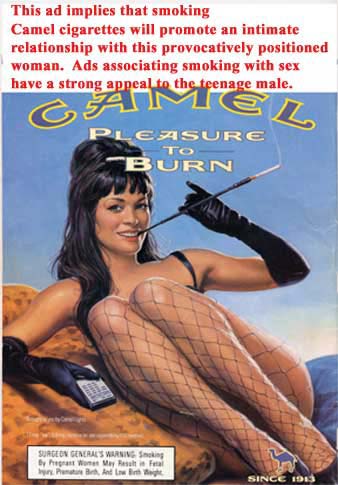
Cigarette companies have one of the strangest public relations jobs. The product that these companies sell will eventually kill the users if used right. Yet they have to also make themselves appear good by warning how smoking is bad. So they have to advertise for and against their products at the same time. The companies that provide products that are supposed to help people to quit smoking also have an odd job. If their products are used right their costumer base would disappear. Maybe if advertisers want to figure out how to be more effective they should look at cigarette companies because arguably they are very good at getting young people to smoke albeit they have a product that once you start using you have a physical need for it. I don’t think there is any other industry that actually is so conflicted in the fact that they have to tell people to not use their product. These companies also have ads that make their product appear to be many things. Sexy, high class, cool, fun and hip you name it and the cigarettes have an image to present to the public. Due to a lawsuit they also have to provide ads against themselves creating a public of image of nasty, disgusting and deadly. I would imagine the PR people for these companies must be very highly paid and good at what they do to be able to continually gain new costumers while trying to get old costumers to quit or never start in the first place.
Tuesday, November 20, 2007
Morning News
Only the nightly news can be taken seriously. NBC’s Today Show is a joke. When I was kid every day when I woke up and went downstairs for breakfast the today show was on. I watched it pretty much every day too until high school and then I started to realize how dumb it was. They spend about tow minutes out of every hour covering stories that are actually important. The rest of the time is spent with long over emotional interviews about stories that are outdated and irrelevant. A lot of time is wasted doing things that are supposed to be funny but really aren’t. The best part is where in the world is Matt Lauer and that only happens once a year and doesn’t have anything to do with news at all. This segment would be better if the travel channel picked it up and turned into a series of its own. This and other morning “news” shows are a good example of the news as entertainment problem. Rather than covering actual relevant events they try and cover human interest stories that were never terribly interesting to me or do things that may have some vague connection to a current event and try and make it entertaining. Even the nightly news isn’t all that great to watch. There will be four stories maybe on the national news then a bunch of human-interest stories. Basically I find the television news very hard to relate to and not terribly relevant to me.
Sunday, November 11, 2007
Internet
The Internet has revolutionized college student’s lives. It has made it infinitely harder to stay focused, easier to do research and a lot easier to kill boredom. Addictinggames.com has given me hours of entertainment although at the expense of my grades I fear. Collegehumor.com is always there for me when I need a laugh. I don’t think today’s college students could imagine dorm life without the Internet for Facebook. Even the school relies on the web for class registration and many other needs. It is impossible for me to imagine what it would have been like to go to college without the Internet. I imagine a lot more secretaries and such would have been needed to get paperwork done. Having the Internet depending on how it is viewed has greatly improved colleges in many ways by improving the amount of research that can be done and for students allowing them to be more easily connected and give them entertainment. People who went to college years ago may argue that it isn’t good in ways that students don’t have the sense of community that there once was, that they can sit in their rooms and talk to friends and go on their computers for entertainment rather than going out and meeting new people. The ease with which classes can be registered for now and grades can be distributed must be a lot easier. In fact this assignment wouldn’t even be possible without the Internet showing how much more than anything that the Internet has added to the culture of America and the colleges.
Sunday, November 4, 2007
Television
Today as I watched the Vikings game I felt an unusual surge of anger. It was unusual in that it was stronger than my normal anger that is constantly raging. This was caused by the stupidity of the football announcers during the game. Maybe it is just because football has such long periods of inactivity that the announcers end up saying stupid stuff or maybe it is just because they are dumb but I seriously couldn’t take it. They invent obscure records that aren’t that impressive to make the game more interesting. Like who cares if this guy has the most touchdowns at the Metrodome on the fourth of November. That isn’t really that impressive. And the programming is so controlled by advertising it is ridiculous to me. Any amount of time over thirty seconds is instantly zapped away to commercials not to mention the planned breaks and then to have to listen to two doofuses talk about how much they like that networks shows is enough to make me cry. I mean I really respected Bob Costas as an announcer until I saw him try to be funny. In the two minutes of programming that the network allowed some analysts between commercials they had one of those old electronic football games and Bob was going to do it and it didn’t work. So he started shaking it around, “There they go!” Then the forced laughter of the other guys made me sad. It was just so dumb. Watching the combination of announcers on Fox of Jimmy Johnson, Terry Bradshaw, and Howie Long I actually felt myself getting dumber. I wish the networks could figure out a system to show commercials only in between commercials and that the league could speed the games up so 1. We don’t have to deal with as many commercial breaks slowing the game down and 2. Not have to deal with the dumbass announcers for as long and have less non-game studio programming.
Sunday, October 28, 2007
Radio
In eighth grade I had to a project that was to write to a congressperson about an issue so I wrote about Clear Channel’s consolidation of radio stations throughout the country and how this was ruining radio I felt. The stations had too many commercials, not enough variety, and played the same songs over and over. Well in the five years since nothing has happened and Clear Channel still is the radio juggernaut that it was then. What has changed are a couple of things. I stopped listening to the radio stations I listened to then so I no longer cared what Clear Channel did. Also when I did listen to the radio in my car I had a new option, The Current. The Current is an alternative station owned by Minnesota Public Radio. In other words there are no commercials, there is tons of variety, and rarely are songs played twice. While as great as this option has been I have found that it is not a million times better than regular radio like I thought it would be. There are problems that I didn’t think would exist with this station. I barely ever know songs that are played and it almost seems that the DJs play songs that are alternative, very alternative just for the sake of being alternative. So while I used to be as opposed to homogenized radio as one could be I have now come to the realization that it isn’t the end of the world and while the radio market could probably use a little more regulation than it currently has it isn’t the end of our country if things stay the same.
Sunday, October 21, 2007
Artist Integrety
I don’t think illegal downloading is as a big of a problem as it is made out to be for the top selling artists. Mostly when people download they are downloading one song and not an entire album. This brings me to what I think is a big problem then with these artists. Their music is terrible. They have one catchy song but all the rest is just terrible and annoying to listen to. Soulja boy is a good example of this. He has Crank That for a big hit but all the rest of his songs sound exactly the same and are terribly annoying. This one is one of the most annoying things I have ever heard. I think people are more likely to buy the whole alhttp://www.blogger.com/img/gl.link.gifbum if all the songs are actually good. When an artist is relying on one or two hits to sell fifteen songs they don’t even necessarily deserve to be making lots of money. Artists like that don’t even have very strong fan bases anyways. An artist like Radiohead has a very strong and loyal fan base that is wiling to pay eighty dollars for an album and doesn’t rely on just hits to sell their albums. To me music should be an art and not just about making money. I’m not saying I don’t like those catchy songs and one hit wonders but I am saying that those artists shouldn’t complain if they make one good song and ten terrible ones and it doesn’t sell.
Sunday, October 14, 2007
Movies
It seems every decade has a genre of movies that are not very good but many of them are produced in hopes of commercial success. In the 80’s and 90’s there were the action movies that are always rerun on TV that don’t have very good plots but always end up with one guy blowing up a lot of stuff and killing a lot of people. In this current decade though we have come upon the comic book movie, endless sequels and remakes. A few of these have been successful and pretty good. Spiderman was the first big one to hit it off and that movie was a good one. The rest of the movies that were spawned because of this though the same cannot be said for. Catwoman was awarded with a Razzie as worst movie of the year. This is a good example of the blockbuster syndrome in the movie industry. One movie makes it big and then many in the same genre but not nearly of the same quality are thrown out and most of them end up failing because they are bad. It would be nice to see more original movies out too. So many of the remakes that are constantly being put out are no good either. When trying to remake a movie that is already a classic is not already hard enough they are usually put out quick in the hops of making money so they are not very good either. Well last year The Departed was a really good movie and I hope for another one like it this year and it seems like there are some good ones but I haven’t been able to see any yet. Oh well I will soon enough.
Sunday, October 7, 2007
Rolling Stone
In my lifetime the magazine that I have kept the longest allegiance to was Rolling Stone. That was until recently. Last year as my subscription ran out and I was sent letter after letter trying to get me to renew, I realized I really didn't care whether or not I kept receiving the magazine. To me it had become boring to read, all the articles were the same, and I could find better information about the people the editors considered important in five minutes of surfing the Internet. The magazine has strayed far from its roots. The magazine started out as part of the sixties counterculture and now has come around to being an advocate of mainstream pop culture. The winners of American Idol have appeared on the cover along with other actors and musicians who are essentially one hit wonders. They are shown at the top of their fifteen minutes of fame and have no real significance. The article or profiles of famous people in the magazine are never very interesting. The reviews are biased heavily to in favor of artists who are very established. Certain artists will get great reviews no matter what it seems. Many people may dislike the magazine as well because of its heavily liberal bias. It doesn’t bother me but many people subscribing for a music magazine will not be happy with some of the opinion pieces. I liked the magazine at first but after awhile it seems with all magazine it starts to become repetitious and it is time to move on.
Sunday, September 30, 2007
US to Iran
Last week the leader of Iran spoke at Columbia University, President Ahadinejad. He made some controversial marks, especially relating to the Holocaust.
While I do not personally agree with Mr. Ahadinejad’s comments I think it is good that he was allowed to speak. According to our president, Iran is currently one of the greatest threats in the world. Therefore getting to know what the leader to of this country says can provide many insights into whether it should be a serious concern.
His comments also give the public a good idea of how different some people view history in other places. The fact that the holocaust is not considered fact and needs to be researched further would be crazy talk in America and the most of the rest of the world. I was exposed to the holocaust in elementary school and never doubted its existence. Yet in Iran one would assume this is a widely held opinion if seeing as the president believes it.
It illustrates that perhaps the United States current foreign policy focus more on the education system of these countries than threatening them militarily. Sometimes the greatest ways to make change can be pursued through alternative methods other than violence.
I think it was good for a college to allow this kind of speaker. It shows that colleges are one of the great forums open for any ideas no matter how controversial. It is especially important because it shows that America is still upholding the first amendment rights even if it is for a country that is our “enemy”.
While I do not personally agree with Mr. Ahadinejad’s comments I think it is good that he was allowed to speak. According to our president, Iran is currently one of the greatest threats in the world. Therefore getting to know what the leader to of this country says can provide many insights into whether it should be a serious concern.
His comments also give the public a good idea of how different some people view history in other places. The fact that the holocaust is not considered fact and needs to be researched further would be crazy talk in America and the most of the rest of the world. I was exposed to the holocaust in elementary school and never doubted its existence. Yet in Iran one would assume this is a widely held opinion if seeing as the president believes it.
It illustrates that perhaps the United States current foreign policy focus more on the education system of these countries than threatening them militarily. Sometimes the greatest ways to make change can be pursued through alternative methods other than violence.
I think it was good for a college to allow this kind of speaker. It shows that colleges are one of the great forums open for any ideas no matter how controversial. It is especially important because it shows that America is still upholding the first amendment rights even if it is for a country that is our “enemy”.
Saturday, September 29, 2007







Subscribe to:
Posts (Atom)